7.3.15

Good gardening advice from the 1870s

I haven't reviewed a book here in a while. I've done two in the past:


which you can take a look at. The gardening (or garden-related) books which really interest me have stories with unusual characters and their relationships with plants. Gardens are often just stages on which these characters perform their plays. The types of books that absolutely disinterest me are the gardening "how-to" ones, especially "how to grow vegetables and/or fruit as organically and cheaply as possible." Now, not to come across as a curmudgeon, I understand for the majority of newbie gardeners who are taking the plunge with their shovels and wallets into the wild and woolly world of growing fresh food will find such information useful. Education is always a good thing, especially if one learns that "gardening" can encompass more than growing turf and using bags of weedkiller and synthetic fertilizers. I just can't fathom reading two hundred plus pages about this--not very entertaining.

What I did find interesting is a book I recently borrowed from my city's public library titled "Pleasures of the Garden: A Literary Anthology" edited by Christina Hardyment (2014, The British Library, London.)


Book cover of "Pleasures of the Garden" by Christina Hardyment
Source: http://www.amazon.ca/Pleasures-Garden-A-Literary-Anthology/dp/0712357203

During last month's abysmal weather, the various poems, letters, magazine articles, and excerpts from essays and novels in this book transported me to warmer climes across the centuries. I heard my version of the voices of Homer, Pliny the Younger, Voltaire, Gertrude Jekyll and many others extolling the virtues of this plant or criticizing the hubris of that gardener. It's reassuring to read that people were catty about what grew over their neighbour's fence many centuries ago! Things haven't changed that much...

One particular passage caught my eye. It was written and published recently (well, relatively) and has a tone that is somewhat wry and ironic to 21st century readers. It's an excerpt from A Summer in a Garden written by an American amateur gardener and (professional?) humourist Charles Dudley Warner. He was a contemporary of Mark Twain and as you read the passage, it's not too difficult to pick up Twain's voice in Warner's writing. 

A Summer in a Garden reports on Warner's gardening at his place called Nook Farm, near Hartford, CT. You may find the language a little outdated, sexist, and overtly religious but try to find the humour in what he writes about. (Put in context, I imagine his readership was likely composed mainly of other white, affluent males in Connecticut like himself!) It's part practical gardening advice and  part Sunday sermon but more than a few of Warner's observations are amusing, witty and uncomfortably accurate if you're slogging away in the garden. After all, human nature and Mother Nature haven't changed appreciably over the centuries.

After reading what follows, it's very possible that you'll think about weeding in a different way!

Here's Warner's passage from Hardyment's book, pages 148-150:


"The love of dirt is among the earliest of passions, as it is the latest. Mud-pies gratify one of our first and best instincts. So long as we are dirty, we are pure. Fondness for the ground comes back to man after he has run the round of pleasure and business, eaten dirt, and sown wild-oats, drifted about the world, and taken the wind of all its moods. The love of digging in the ground (or of looking on while he pays another to dig) is as sure to come back to him as he is sure, at last, to go under the ground, and stay there. To own a bit of ground, to scratch it with a hoe, to plant seeds and watch their renewal of life, this is the commonest delight of the race, the most satisfactory thing a man can do.

However small it is on the surface, it is four thousand miles deep; and that is a very handsome property.And there is a great pleasure in working in the soil, apart from the ownership of it. The man who has planted a garden feels that he has done something for the good of the World. He belongs to the producers. It is a pleasure to eat of the fruit of one's toil, if it be nothing more than a head of lettuce or an ear of corn. One cultivates a lawn even with great satisfaction; for there is nothing more beautiful than grass and turf in our latitude. The tropics may have their delights, but they have not turf: and the the world without turf is a dreary desert. The original Garden of Eden could not have had such turf as one sees in England.

There is life in the ground; it goes into the seeds; and it also, when it is stirred up, goes into the man who stirs it up. The hot sun on his back as he bends to his shovel and hoe, or contemplatively rakes the warm and fragrant loam, is better than much medicine. The buds are coming out on the bushes round about; the blossoms of the fruit trees begin to show; the blood is running up the grapevines in streams; you can smell the wild flowers on the near bank; and the birds are flying and glancing and singing everywhere. To the open kitchen door comes the busy housewife to shake a white something, and stands a moment to look, quite transfixed by the delightful sights and sounds. Hoeing in the garden on a bright, soft May day, when you are not obligated to, is nearly equal to the delight of going trouting...

The principal value of a private garden is not understood. It is not to give the possessor vegetables or fruit (that can be better and cheaper done by the market-gardeners), but to teach him patience and philosophy and the higher virtues, hope deferred and expectations blighted, leading directly to resignation and sometimes to alienation. The garden thus becomes a moral agent, a test of character, as it was in the beginning.

The first pleasant thing about a garden is, that you never know when to set it going. If you want anything to come to maturity early, you must start it in a hothouse. If you put it out early, the chances are all in favor of getting it nipped with frost. And, if you do not set out plants or sow seeds early, you fret continually;knowing that your vegetables will be late, and that, while Jones has early peas, you will be watching your slow-forming pods. This keeps you in a state of mind. When you have planted anything early, you are doubtful whether to desire to see it above ground, or not. If a hot day comes, you long to see the young plants; but, when a cold north wind brings frost, you tremble lest the seeds have burst their bands. Your spring is passed in anxious doubts and fears, which are usually realized; and so a great moral discipline is worked out for you...

The most humiliating thing to me about a garden is the lesson it teaches of the inferiority of man. Nature is prompt, decided, inexhaustible. She thrusts up her plants with a vigour and freedom that I admire; and the more worthless the plant, the more rapid and splendid its growth. She is at it early and late, and all night; never tiring, nor showing the least sign of exhaustion... There is no liberty in gardening. The man who undertakes a garden is relentlessly pursued. He felicitates himself that, when gets it once planted, he will have a season of rest and of enjoyment in the sprouting and growing of his seeds. It is a green anticipation. He has planted a seed that will keep him awake nights; drive rest from his bones, and sleep from his pillow. Hardly is the garden planted, when he must begin to hoe it. The weeds have sprung up all over it in a night. They shine and wave in redundant life. The docks have almost gone to seed; and their roots go deeper than conscience. Weeds have hateful moral qualities. To cut down a weed is to do a moral action. I feel as if I were destroying sin. My hoe becomes an instrument of retributive justice. I am an apostle of Nature. This view of the matter lends a dignity to the art of hoeing which nothing else does, and lifts it into the region of ethics. Hoeing becomes, not a pastime, but a duty. And you get to regard it so, as the days and the weeds lengthen. The hoe is an ingenious instrument, calculated to call out a great deal of strength a t a great disadvantage. Nevertheless, what a man needs in gardening is a cast-iron back,-- with a hinge in it."


This collection of classic garden writing presents the garden as place of solace in our busy world, a retreat for lovers, and even an earthly paradise. Bringing together a wide range of voices from across the centuries and around the globe—from Pliny in first-century Italy to Robert Louis Stevenson in nineteenth-century Hawaii—Pleasures of the Garden features fiction and poetry, memoirs and letters, all in celebration of gardens
Published by: British Library
Date published: 04/15/2014
ISBN: 978-0712357203
Available in Hardcover

3.3.15

Toronto spring garden cleanups for 2015

Toronto has gone through a really rough winter and your garden beds are showing it! 

A spring garden cleanup is in order to get your garden off to a great 2015. I'll help with your gardening needs by:

  • removing leaves and debris from your garden beds left over from last fall
  • pruning away the dead stalks and leaves from old perennials
  • gently turning over and cultivate the soil in your garden beds, adding new compost or topsoil as necessary to rejuvenate the soil without chemical fertilizers
  • removing any annuals from last year
  • pruning shrubs and small trees for diseased, dead or crossing branches
  • edge, with a spade, your garden beds to create a crisp and tidy look

Call me at 416-515-2780 or email me  info@pauljunggardening.com to set up an appointment soon as my calendar becomes quickly filled starting April 1, 2015.

Tulipa kaufmanniana Allan Gardens Conservatory 2015 Spring Flower Show by Paul Jung Gardening Services Toronto

2.3.15

Allan Gardens Conservatory Spring Flower Show for 2015 (part one)

Flowers: Toronto gardeners, remember those things?


Tulipa kaufmanniana Allan Gardens Conservatory 2015 Spring Flower Show by garden muses-not another Toronto gardening blog
Tulipa kaufmanniana at the
Allan Gardens Conservatory
2015 Spring Flower Show

The beginning of spring, according to the calendar, is a mere 3 weeks away but looking outside of my Toronto garden, winter is still winning the battle. Good news for gardeners and lovers of greenery: this year's version of the Allan Gardens Conservatory Spring Flower Show is underway and the national flower show ("Canada Blooms") is scheduled to open on March 13.

Here are some pictures of tulips, crocus, daffodils and other reminders of colour-to-be in our gardens soon. I'll post a second article once the hyacinths, daffodils, and other tulips are in bloom at the Conservatory.

Goodness, the sight of these tulips et al. are welcome right now, given how harsh February was.


Crocus Allan Gardens Conservatory 2015 Spring Flower Show by garden muses-not another Toronto gardening blog
Crocuses at the
Allan Gardens Conservatory
2015 Spring Flower Show

Crocuses Allan Gardens Conservatory 2015 Spring Flower Show by garden muses-not another Toronto gardening blog
Pale blue crocuses at the
Allan Gardens Conservatory
2015 Spring Flower Show

Allan Gardens Conservatory 2015 Spring Flower Show crocuses by garden muses-not another Toronto gardening blog
Allan Gardens Conservatory
 2015 Spring Flower Show
pale blue crocuses

Yellow daffodils Allan Gardens Conservatory 2015 Spring Flower Show by garden muses-not another Toronto gardening blog
Yellow daffodils at the
Allan Gardens Conservatory
 2015 Spring Flower Show 

Double yellow daffodil Allan Gardens Conservatory 2015 Spring Flower Show by garden muses-not another Toronto gardening blog
Double yellow daffodil at the
Allan Gardens Conservatory
2015 Spring Flower Show 

White gerbera daisy Allan Gardens Conservatory 2015 Spring Flower Show by garden muses-not another Toronto gardening blog
White gerbera daisy at the
Allan Gardens Conservatory
 2015 Spring Flower Show

Allan Gardens Conservatory 2015 Spring Flower Show white gerbera daisy by garden muses-not another Toronto gardening blog
Allan Gardens Conservatory
2015 Spring Flower Show
white gerbera daisy 

Verbascum phoeniceum 'Violetta' mullein Allan Gardens Conservatory 2015 Spring Flower Show by garden muses-not another Toronto gardening blog
Verbascum phoeniceum 'Violetta' mullein
at the Allan Gardens Conservatory
2015 Spring Flower Show

Purple streaked tulip Allan Gardens Conservatory 2015 Spring Flower Show by garden muses-not another Toronto gardening blog
Purple streaked tulip at the
Allan Gardens Conservatory 2015
Spring Flower Show

Allan Gardens Conservatory 2015 Spring Flower Show Tulipa kaufmanniana  by garden muses-not another Toronto gardening blog
Allan Gardens Conservatory
2015 Spring Flower Show
 Tulipa kaufmanniana  

Kaufman tulips Allan Gardens Conservatory 2015 Spring Flower Show by garden muses-not another Toronto gardening blog
Kaufman tulips at the
 Allan Gardens Conservatory 2015
Spring Flower Show

Allan Gardens Conservatory 2015 Spring Flower Show Kaufman tulips by garden muses-not another Toronto gardening blog
Allan Gardens Conservatory
2015 Spring Flower Show
Kaufman tulips 


Allan Gardens Conservatory 2015 Spring Flower Show white Dianthus barbatus Sweet William by garden muses-not another Toronto gardening blog
Allan Gardens Conservatory
 2015 Spring Flower Show
white Dianthus barbatus (Sweet William) 

Allan Gardens Conservatory 2015 Spring Flower Show pink gerbera daisy by garden muses-not another Toronto gardening blog
Allan Gardens Conservatory
2015 Spring Flower Show
pink gerbera daisy

Orange schizanthus butterfly flower Allan Gardens Conservatory 2015 Spring Flower Show by garden muses-not another Toronto gardening blog
Orange schizanthus (butterfly flower) at the
 Allan Gardens Conservatory
2015 Spring Flower Show 

Agapanthus Lily of the Nile Allan Gardens Conservatory 2015 Spring Flower Show by garden muses-not another Toronto gardening blog
Agapanthus (Lily of the Nile) at the
 Allan Gardens Conservatory
2015 Spring Flower Show 


Orange tulips Allan Gardens Conservatory 2015 Spring Flower Show by garden muses-not another Toronto gardening blog
Orange tulips at the
Allan Gardens Conservatory
2015 Spring Flower Show 


Yellow Cymbidium Allan Gardens Conservatory 2015 Spring Flower Show by garden muses-not another Toronto gardening blog
Yellow Cymbidium at the
Allan Gardens Conservatory
2015 Spring Flower Show 

19.2.15

Cloud pruning at a theme park? At Orlando's Universal Studios Resort, yes!

What if Dr. Seuss was your gardener? 

It's an occupational hazard of sorts: being interested in plants and landscape design has its drawbacks when travelling, You pay good money to get away, soak up some sun, do a bit of shopping, or experience some Wonders of the World and all you can see are...plants. How they are unlike the ones you see at home, how great or bad they are used in designs, how hard is it to get some seeds or cuttings past customs. Sympathetic spouses and family are priceless in this regard.

We (family and I) escaped from Toronto last weekend and stayed in comparatively "scorching" Orlando, Florida at Universal Studios theme park.

 (I can't think of a better word than "escape" as frigid air from the Arctic flowed into the Great Lakes area resulting in minus 40 degree C. windchill while we were away. I had images of the mass of polar air chasing our plane travelling south!)

We haven't been to Orlando since 2011 and were looking forward to warmer temperatures and greener environments. The mornings were cool but by noon, the sun warmed us up and I enjoyed exposing my sunlight-deprived arms to a bit of direct light without worrying about hypothermia.

Universal Studios' main draw for us was the "Wizarding World of Harry Potter" as we've read and seen all the books and movies. Short of being on the actual filming locations, the re-creations here of Diagon Alley, the Hogwarts Express train and Hogwarts Castle were excellent. If you can handle the crowds, hour wait time for rides and way overpriced Butterbeer and student robes, you have to visit.


Hogwarts Castle Harry Potter Wizarding World Universal Studios Orlando by garden muses-not another Toronto garden blog
Hogwarts Castle
Harry Potter Wizarding World
at Universal Studios, Orlando 


Of course, there is much more to see and experience: dozens vomit-inducing (for me) roller coaster and motion-simulated rides, lots of shows, and thank goodness, a couple of Starbucks. But getting back to the plants...

Being a zone 5 gardener, I know nothing about the wonderful and "exotic" trees, shrubs, palms and cycads thriving in zones 8-10 Florida. I love their forms and the fact that I can see green in February without being in a conservatory or greenhouse if I was back in Toronto. I'm sure, though, that 99.9% of Universal's visitors find the plantings irrelevant which is fair since they're here for the rides and attractions and not on a botanical garden visit. I became part of that 0.1% (even this is extremely generous) as I snapped pictures of flowers and shrubs! (My wife is used to this and is very patient, bless her.)

Eventually, we made our way to the "Islands of Adventure" section and I started to see, well, topiaries and lots of them. Trees shaped into upside flower pots or cupcakes seemed, to me, strange given the action-oriented setting. If anything, they hide the signage.


Topiaries Marvel Super Hero Island Universal Studios Orlando by garden muses-not another Toronto garden blog
Topiaries in Marvel Super Hero Island
at Universal Studios, Orlando


A little further down, we entered "Seuss Landing" and then things became very interesting, horticulturally.


Seuss Landing Universal Studios Orlando by garden muses-not another Toronto garden blog
Seuss Landing entrance
at Universal Studios, Orlando

You've might have read "The Lorax"  so you'll recognize these Truffula Trees:

Seuss Landing Truffula Trees Universal Studios Orlando by garden muses-not another Toronto garden blog
Seuss Landing's Truffula Trees
at Universal Studios, Orlando


I felt a little like Alice through the Looking Glass in the picture below. I wasn't posing, honest. I was merely taking in the bight yellow-orange Truffula 'bloom" against the brilliant Orlando sky.

Truffula Trees Seuss Landing Universal Studios Orlando by garden muses-not another Toronto garden blog
Truffula Trees in Seuss Landing
at Universal Studios, Orlando 


The bright colours and non-linear shapes really appealed to me. Things seemed whimsical, trippy, and absolutely asymmetrical, just like the illustrations in a Dr. Seuss book. I don't know why, then, I found these "cloud pruned" trees somewhat incongruous given the setting. They echo the Truffula Trees but I thought immediately of "niwaki", the Japanese practice of pruning or sculpting trees and shrubs in ways to coax their inherent spirit out.

Here's a good link for more information about niwaki: http://www.japanese-gardens-and-niwaki.com/niwaki.htm

Cloud pruning Seuss Landing Universal Studios Orlando by garden muses-not another Toronto garden blog
Cloud pruning in Seuss Landing
at Universal Studios, Orlando


Seuss Landing cloud pruning Universal Studios Orlando by garden muses-not another Toronto garden blog
Seuss Landing cloud pruning
at Universal Studios, Orlando


Niwaki  Seuss Landing Universal Studios Orlando by garden muses-not another Toronto garden blog
Example of Niwaki in Seuss Landing
at Universal Studios, Orlando


Since niwaki embodies a high form of gardening (art?)  in Japan and involves years of practice to master, do the gardeners at Universal possess the same spirit? Do the "mow, blow and go" landscaping crews in your neighbourhood have the same sensibilities? (Ok, the last question was rhetorical!)


Spiral juniper topiary Seuss Landing Universal Studios Orlando by garden muses-not another Toronto garden blog
Spiral juniper topiary in Seuss Landing
at Universal Studios, Orlando 

I've seen similar spiral-pruned junipers, ad nauseum, in front of McMansions so it was initially strange to see them here. But it soon made sense: the more contorted the forms, the better.

I made the observation that the same plants (or at least, the same forms) can make sense, design-wise, in seemingly completely different settings. Seuss Landing in Orlando is as far from a formal English garden culturally as can be but the topiaries add whimsy and deliberate eccentricity to both spaces. The topiaries make sense functionally in both locations.

Seuss Landing topiary Universal Studios Orlando by garden muses-not another Toronto garden blog
Seuss Landing topiary
at Universal Studios, Orlando


Topiary Seuss Landing Universal Studios Orlando by garden muses-not another Toronto garden blog
Topiary in Seuss Landing
at Universal Studios, Orlando

Dr. Seuss-inspired topiaries made me smile.  Not sure if the upper fellow is sitting or standing? Of course, children visiting don't ask such a mundane question--they just find him/her/it funny!


Curved palms Seuss Landing Universal Studios Orlando by garden muses-not another Toronto garden blog
Curved palms in Seuss Landing
at Universal Studios, Orlando


Bent palms Seuss Landing Universal Studios Orlando by garden muses-not another Toronto garden blog
Bent palms in Seuss Landing
at Universal Studios, Orlando 


Even the palms look like Truffula Trees. Apparently, they were re-used perfectly here after being damaged by Hurricane Andrew.

My thoughts drifted between the formal topiaries in Europe, to the niwaki and cloud pruning traditions in Japan, to my cherished memories of reading Dr. Seuss to my kids so long ago.

Completely unexpected and unanticipated. The garden muses had visited me again!

Below are some flowers blooming here and there throughout Universal. I'm sure they're common as nails to Floridians but I appreciate them nevertheless.

Tibouchina urvilleana edwardsii Glory Flower Universal Studios Orlando by garden muses-not another Toronto garden blog
Tibouchina urvilleana edwardsii
(Glory Flower)
at Universal Studios Orlando


Yellow tropical hibiscus rosa sinensis  Universal Studios Orlando by garden muses-not another Toronto garden blog
Yellow tropical hibiscus
(Hibiscus rosa-sinensis)
at Universal Studios, Orlando


Thunbergia grandiflora Blue Sky vine Universal Studios Orlando by garden muses-not another Toronto garden blog
Thunbergia grandiflora (Blue Sky vine)
at Universal Studios, Orlando


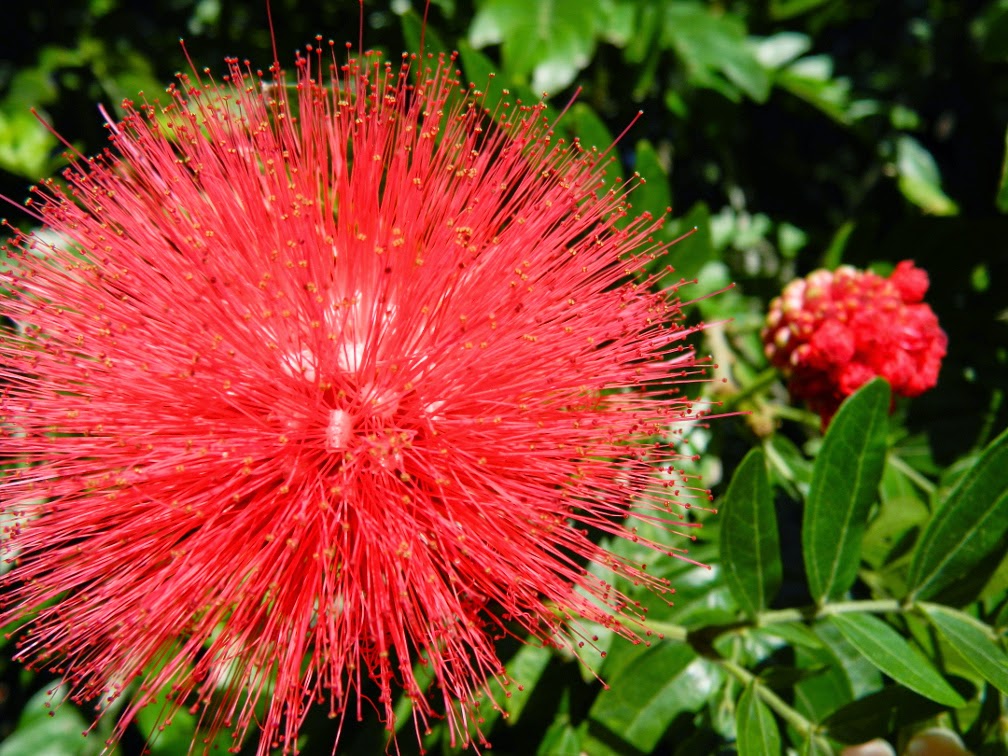
Red Powder Puff tree Calliandra haematocephala  Universal Studios Orlando by garden muses-not another Toronto garden blog
Red Powder Puff tree (Calliandra haematocephala)
at Universal Studios, Orlando


Pale pink azaleas Universal Studios Orlando by garden muses-not another Toronto garden blog
Pale pink azaleas
at Universal Studios, Orlando 

Pink azaleas Universal Studios Orlando by garden muses-not another Toronto garden blog
Pink azaleas
at Universal Studios, Orlando 


I wanted to end this post by providing two links that I think you'll find interesting.

The first is another blogger's post that I stumbled upon. Apparently, someone else found the plantings at Universal worth writing about! I'm relieved to discover that I wasn't the only one with this strange affliction of looking at plants at theme parks.

Here's Beth's post:


The second link leads to a fascinating article about the design process behind Seuss Landing's creation from concept to construction. 


6.1.15

How do you care for an Amaryllis after it blooms?

Amaryllis after-care: nice blooms, now what?


I've seen many beautiful pictures in person and via social media of Amaryllis blooms over the past Christmas holidays and what's not to love? (Note: the correct name for these bulbs forced to bloom over Christmas is Hippeastrum but since the buying public still refers to the plants as Amaryllis, I'll use "Amaryllis". You can delve into the nomenclature back and forths on the wikipedia Hippeastrum link.) Big and gaudy red and/or white blooms borne on tall stems add to the festive feeling along with the ubiquitous poinsettias. But like the moments after the Christmas presents are opened, things are a little anti-climatic. Your Amaryllis bulb has done what it's programmed to do, the petals have dropped and now you're left with a green stick.
Now what?


Apple Blossom Amaryllis Hippeastrum Allan Gardens Conservatory by garden muses-not another Toronto gardening blog
"Apple Blossom" Amaryllis (Hippeastrum
at the Allan Gardens Conservatory


Instead of chucking out the spent bulb, you could follow the steps below and hope your Amaryllis re-flowers (reading over these steps, it seems to me quite reasonable to ensure more blooms next December but there is work involved!)

But let's enjoy some of the blooms I caught digitally at the Allan Gardens Conservatory recently as part of its annual Christmas Flower Show. (These are just four cultivars among the dozens available in stores and mail order.)


Charisma Amaryllis Hippeastrum Allan Gardens Conservatory by garden muses-not another Toronto gardening blog
"Charisma" Amaryllis (Hippeastrum)
at the Allan Gardens Conservatory


Prelude Amaryllis Hippeastrum Allan Gardens Conservatory by garden muses-not another Toronto gardening blog
"Prelude" Amaryllis (Hippeastrum
at the Allan Gardens Conservatory


Aphrodite Amaryllis Hippeastrum Allan Gardens Conservatory by garden muses-not another Toronto gardening blog
"Aphrodite" Amaryllis (Hippeastrum
at the Allan Gardens Conservatory


Hymenocallis littoralis Spider lily Allan Gardens Conservatory by garden muses-not another Toronto gardening blog
Hymenocallis littoralis (Spider lily) 
at the Allan Gardens Conservatory

I included this Spider Lily in the post because it was blooming and it is in the same botanical family as Hippeastrum. (You can see easily how its common name came about.)


Stage 1: Ensuring the bulb gets fed before forced dormancy (for Northern gardeners)


  • after the flowers fade, cut off stalk to about 1-2" above bulb
  • leave the foliage alone as the bulb needs to replenish food reserves
  • place plant in a sunny location
  • feed with houseplant fertilizer every 2-4 weeks
  • once frost is gone from your area, gradually harden or acclimatize the plant from a shady to sunny location
  • leave the plant outside all summer and fertilize regularly
  • in mid-September, bring it indoors

Stage 2: Tricking the bulb to rebloom by forcing it to undergo dormancy (the really fun and tricky part!)

  • place plant in a cool (50-55 degrees F) and semi-dark location for at least 8 weeks
  • do not water or water very sparingly
  • cut off dead foliage
  • after 8 weeks, re-start the growth cycle
  • place bulb a sunny and warm (70-75 degree F) location
  • keep soil moist 
  • fertilize every 2-4 weeks

With a bit of luck, you should see new leaves appear and, ideally, the flower shoot.


If all of this seems daunting and messy, you can skip all the above, throw everything into the compost bin, and buy new and already dormant Amaryllis bulbs next December. 

It's best to know our limitations in these matters, would you not agree?


LinkWithin

Related Posts Plugin for WordPress, Blogger...